How I use AI for writing

by Brian on January 24, 2026

in In the News,Reviews,Technology

ChatGPT has taken over my life – in a good way.

Over the last few months, I’ve started to use AI tools like those from OpenAI, Google and Anthropic for an increasingly wide variety of tasks. Some are fairly straightforward – queries about TV show plot twists, translations from Hebrew to English – while others are more radical.

The most unusual: I record my therapy sessions, use a transcription tool to output the result to text, then plug that into ChatGPT with the prompt “summarize this text while highlighting any psychological insights.” Since ChatGPT knows and remembers me, it can generate helpful spins that complement (and sometimes exceed) the therapy itself.

But where I’ve been spending most of my artificially intelligent computer time has been with my writing. Not to actually write a complete article, mind you, but if I want sources on, say, “For how long can one use expired medications?” a ChatGPT query can surface answers and links remarkably fast.

Yes, you do have to check it, as AI chatbots are famously known to hallucinate, making up answers to please the prompter, but the more details I feed into my queries through follow-up iterations, the more accurate the response becomes.

That led me to wonder whether AI could help me with a massive ghostwriting project I’ve been working on. My client and I have been Zooming regularly for close to a year to brainstorm ideas for a business book. We’ve accumulated over 600 different topics comprising an intimidating 1,000,000 words.

That has, understandably, quite overwhelmed me. How could I ever make sense of so much data?

AI to the rescue.

Google’s NotebookLM product (LM stands for “large language model”) is designed for exactly that sort of task. You feed it your source data, and with the right prompts, it will spit back a coherent organization and order.

It took some tweaking: There’s a limit of 50 sources per project (I had twelve times that many) and, being a Google product, it refuses to accept files from archrival Microsoft. But once I’d taken care of grunt work, the project began to take shape – and to make sense.

NotebookLM suggested ways to tie the opening and the conclusion together. It chunked all those topics into a manageable dozen chapters. It wrote sample text. Eventually, I was able to generate a two-page executive summary to share with my client.

He loved the result. And why not? From his end, it was all familiar from our Zoom meetings. But from where I was sitting, it was a towering stress reducer.  Now, I could simply follow the blueprint created by AI – and write.

Still, I worried that, when I sent that summary to my client, he might think to himself, “Gee, why do I need Brian? I’ll just let AI finish the book for me and save the hefty ghostwriting fees.”

Indeed, notes Lulu Meservey, former VP of communications for Substack and current CEO of PR firm Rostra, AI will be “very good at writing and the improvement could come very quickly.” We need to “prepare ourselves for that to happen.”

Newsweek is already getting ready. The magazine says it “is experimenting with AI-based tools to help journalists work faster, smarter and more creatively. But such tools must be used in an ethical way and under the full supervision of journalists.”

I assumed – erroneously, it turns out – that my newspaper colleagues would be writing purists, adamantly against any use of AI in their craft. A quick survey found that they all are using AI to one extent or another, from translating copy from other languages to writing and structuring interview questions.

I decided to try an experiment: I’d ask AI to actually write a chapter-by-chapter first draft of the book. It did a passable job but subsequently required hundreds of clarifying queries and substantial post-prompt editing. I’m happy to say that it was still my writing in the end; if I had submitted an exclusively AI-written book, it would have been embarrassingly mundane.

Can AI work for fiction? I’ve been noodling for years now on a science fiction book idea. It, too, has overwhelmed me.

Dr. Tuhin Chakrabarty, a Columbia University computer scientist, trained several large language models on the writing of a particular fiction author Han Kang, a Nobel laureate. Chakrabarty uploaded all of Han’s work, then fed the AI a description of a certain scene from Han that Chakrabarty had not included and asked the AI to generate it in the author’s style.

Chakrabarty next tasked several creative writing graduate students to complete the same mission. When he challenged a second group of students to compare the versions in blind tests, they “universally preferred the AI version to the imitations their peers had come up with,” The New Yorker’s Vauhini Vara reports. In another test, the readers “preferred the quality of the AI output in almost two-thirds of the cases.”

That gave me the courage to ask ChatGPT to brainstorm with me on my science fiction proposal. The AI came up with new story arcs and compelling plot twists. It suggested additional characters and even a love interest for my protagonist. Will I ask it to write a first draft? I haven’t decided yet.

But the bottle has clearly been uncorked, and the genie is not very quietly leaking out. While this may mean some people will find their employment trajectories severely curtailed, for all of us, our jobs will certainly change with the ascendency of the prompt. For writers, intensive editing will become as important as any initial out-of-the-box composing.

I decided, as a final task in my exploration, to ask AI the role it envisioned for itself in all this. “AI may never be a true ‘friend,’” ChatGPT demurred, “but it can be a real creative partner.”

That retort is no hallucination.

I first wrote about how I use AI for writing in The Jerusalem Post.

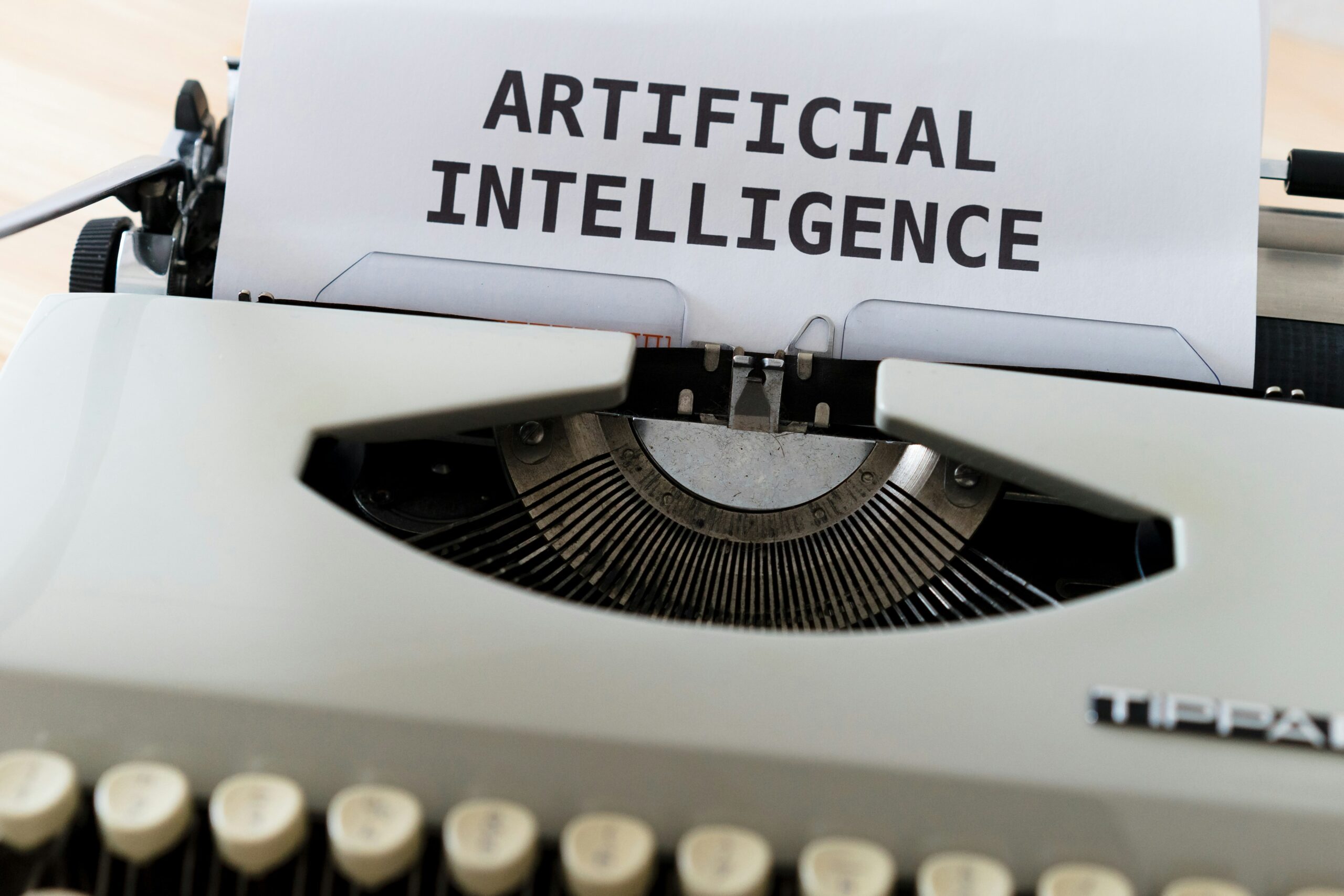
Photo by Markus Winkler on Unsplash

{ 0 comments }
“Are you celebrating anything special?” Eran, our driver at the Six Senses Shaharut resort in Israel’s Arava desert, asked as he loaded our luggage onto one of the electric golf carts that are ubiquitous at this luxury property set in the middle of nowhere.

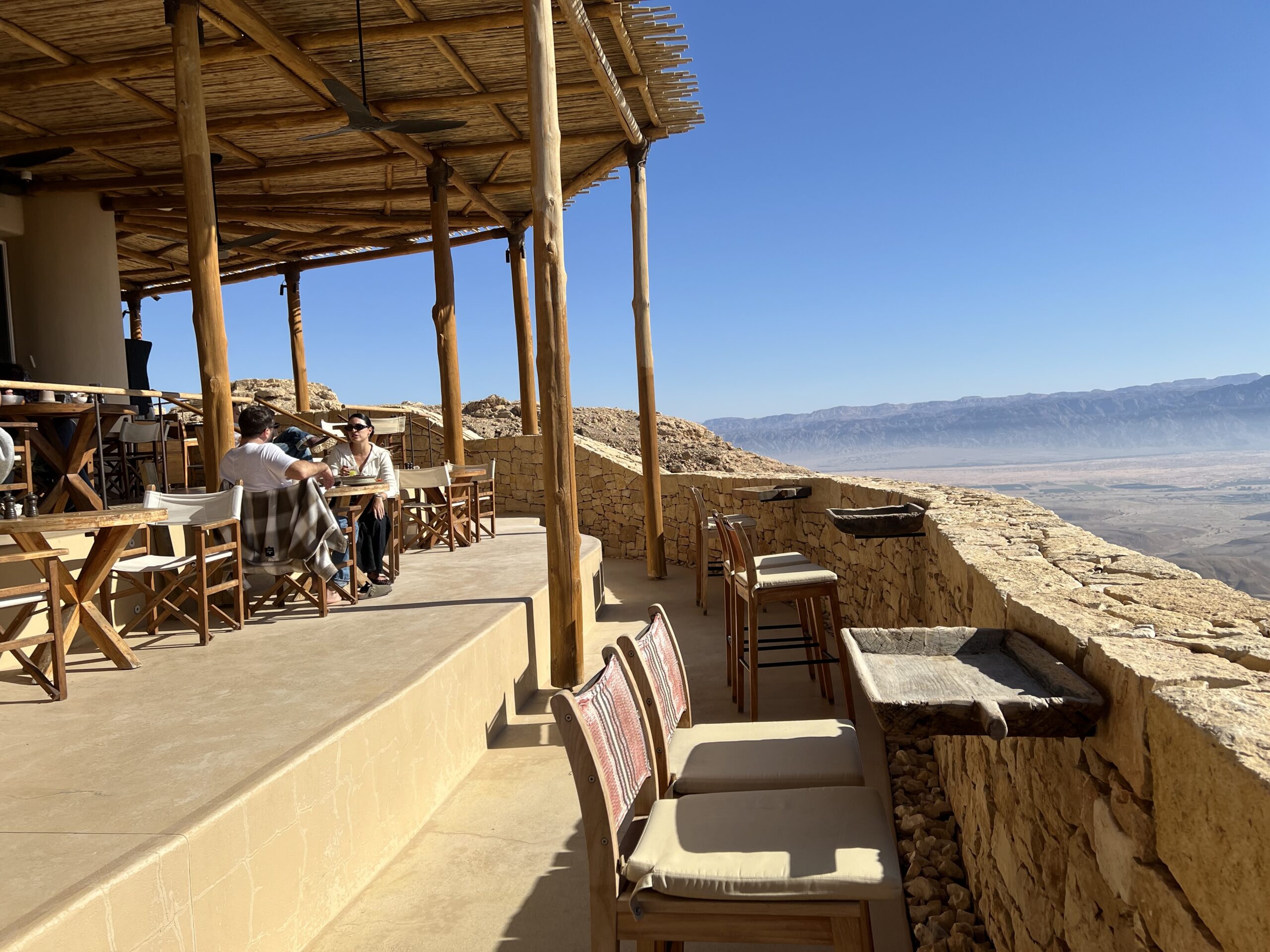
Breakfast at Six Senses Shaharut

For some reason, I tried to answer him in Hebrew. “Ani kimat lo po,” I said, which means literally “I’m almost not here.” In my Hebrew haste, I had left out the verb, the grammatical tense and any meaningful context.

“You mean, you almost had to cancel?” Eran asked, confused.

“No,” I replied, this time mercifully in English. “What I mean is, I almost died. Because of cancer. But a miracle cure knocked out the cancer, so we’ve come to Shaharut to celebrate being alive.”

Eran’s face broke into an ear-to-ear smile. “Walla,” he crooned, using an Arabic expression-turned-Israeli-slang that’s best translated as “Wow.”

We had driven the four-and-a-half hours from Jerusalem to what is undoubtedly Israel’s ritziest getaway hotel property, with its 60 rooms set on a hilltop between deep wadis and high cliffs. (Guests fancier than us sometimes helicopter in.)

My wife, Jody, and I had been following the story of how Israel’s first Six Senses property came to be and had been keen to visit when the resort finally opened in 2021 after Covid delays, but it always seemed too expensive. We needed an excuse, something to make such an extravagance like this worthwhile. Now we had one.

Six Senses is a high-end chain owned by the IHG hotel group. There are 27 Six Senses resorts around the world, from Saudi Arabia to Bhutan, Thailand to Ibiza, all emphasizing wellness and sustainable luxury. More are being built.

Israeli businessman Ronny Douek had the idea of bringing the Six Senses sensibility to Israel. Douek is a well-known social entrepreneur whose non-profit ventures include Zionism 2000, founded following the assassination of Prime Minister Yitzhak Rabin. He served as the chairman of the Israel Anti-Drug Authority and, in 2025, received the Israel Prize for Lifetime Achievement.

His socially oriented background might explain in part one way Shaharut is different than other Six Senses properties around the world: Much of the staff are recently released IDF soldiers participating in a program called “Meudefet,” a job board which offers six months of employment in minimum wage jobs to applicants who don’t have much job history, supplemented by a substantial grant from Bituach Leumi (Israeli social security).

While the younger cohort gives the resort an Israeli casual vibe, the staff receives ample training and made sure we had whatever we needed.

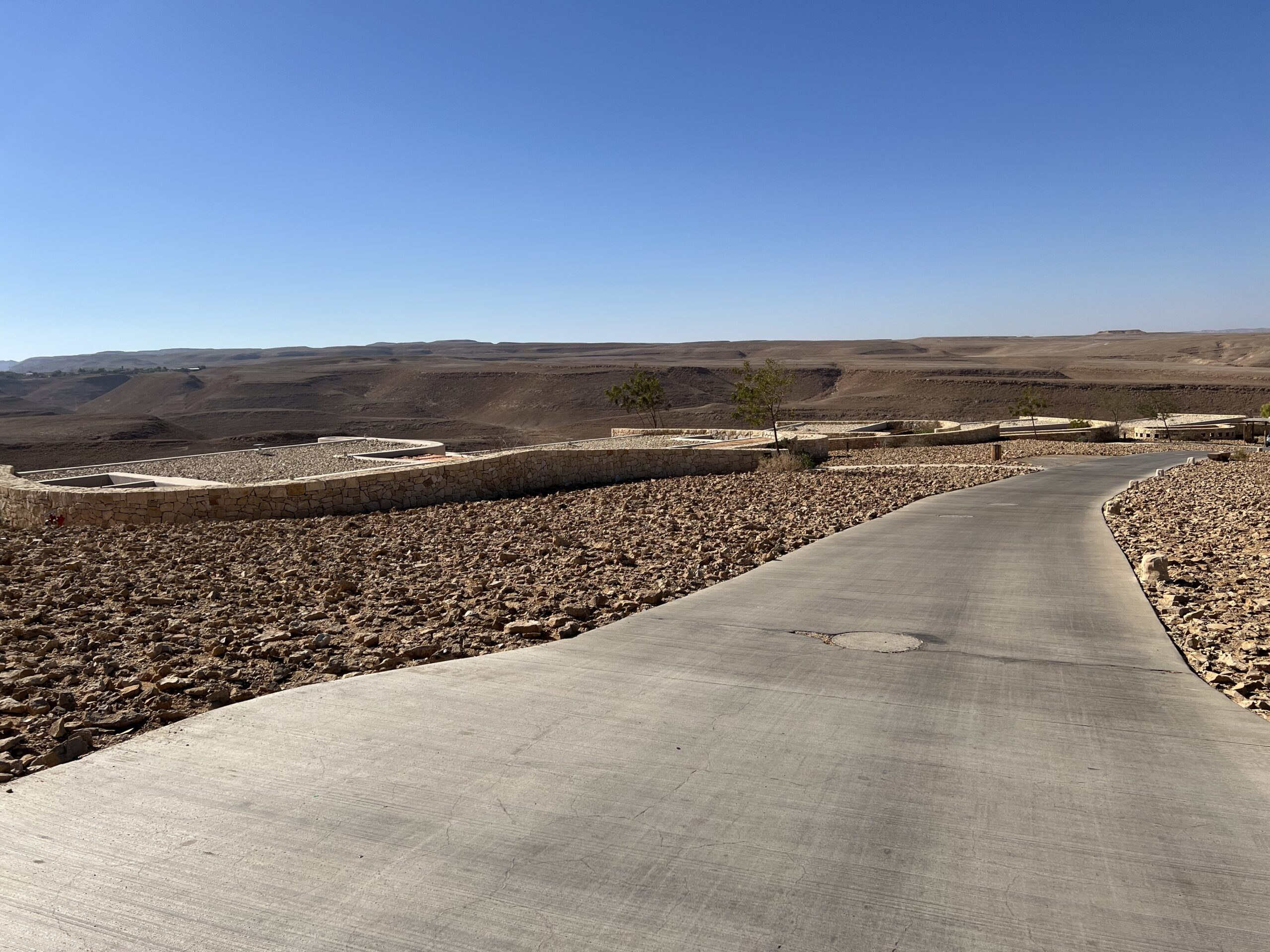
To build Six Senses Shaharut, Douek envisioned a hotel with almost no visible footprint. The rooms and suites are set back and below the gravel walkways that stretch along the top of the desert landscape. The look, Douek has said, was to recreate the feel of a reclaimed Nabatean village – well, one that cost a reported $100 million in design and construction.

Deserted pathways and rooms set back and under

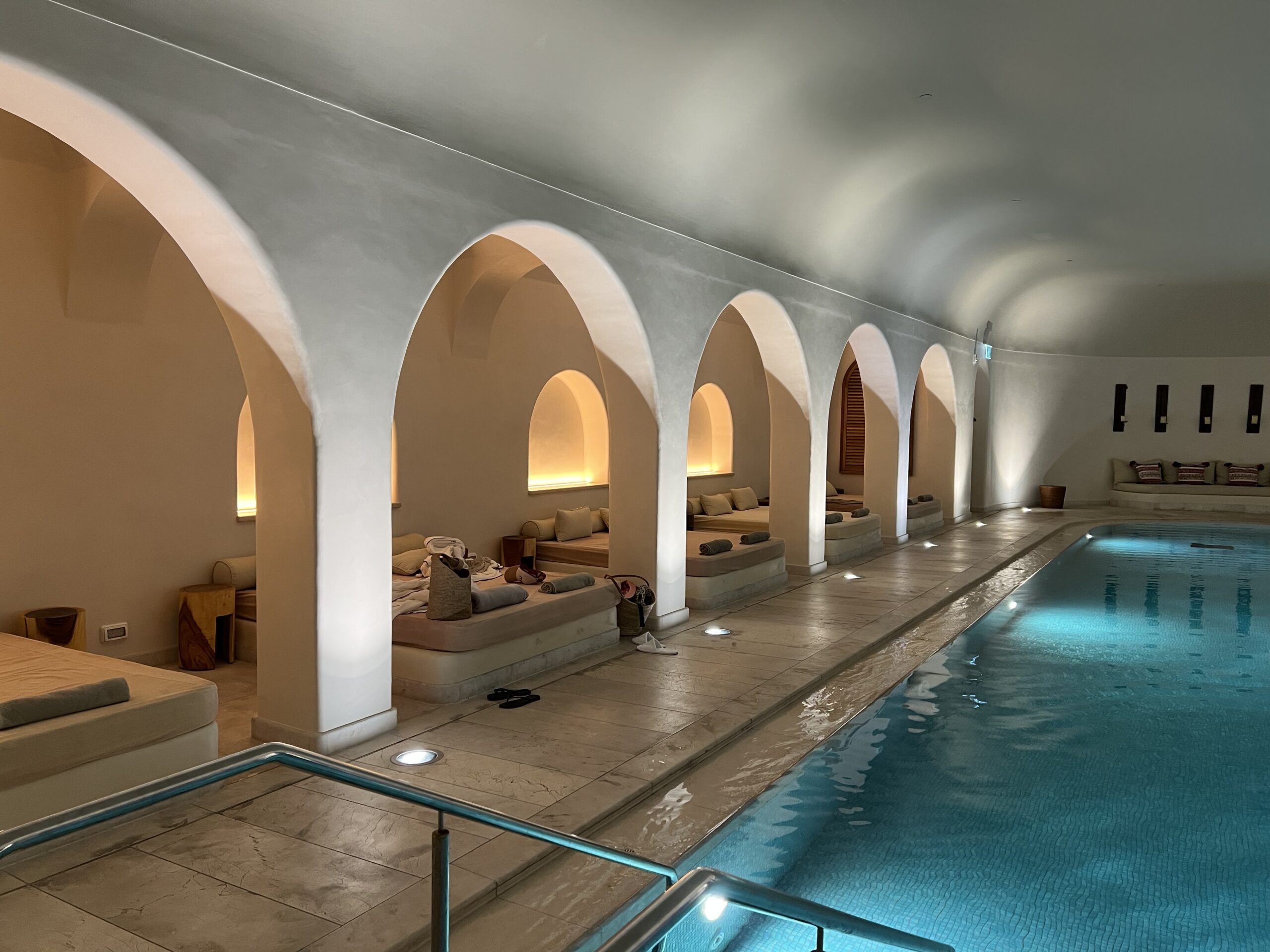
You rarely see anyone walking around; guests are either in their rooms, at the two heated pools (one outdoor, one freshwater indoor) or at Midian, Shaharut’s chef restaurant. You can call reception and order a golf cart to take you to morning yoga or a massage appointment. Your personal car is tucked away in a private parking lot hidden from the rest of the property.

The unpopulated pleasures of the resort are highlighted at night. With just subtle lighting along the paths, there is virtually no light pollution, and the stars shine as brightly as if you were camping somewhere far from civilization along the Israel Trail.

Indeed, Six Senses Shaharut is so isolated that, although we could see the lights from Eilat at night, what might be a 20-minute drive as the crow flies requires an hour-and-ten-minutes circumventing the aforementioned wadis to get there.

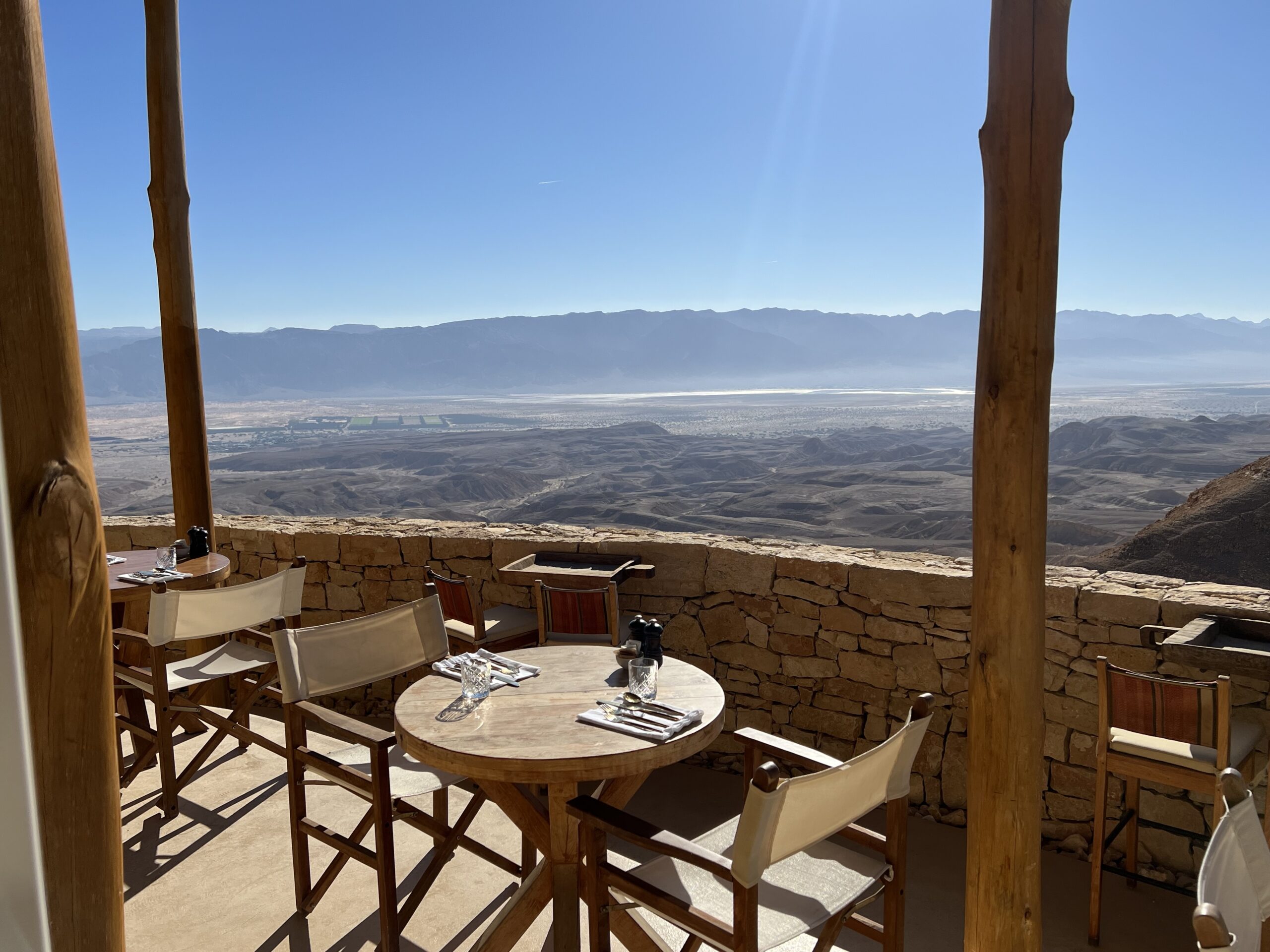
View from breakfast

That led us to a decision that’s not our usual travel style: We never left the property. No hiking. No exploring nearby Timna National Park. After a sumptuous breakfast, with the usual pastries, cheese, lox, eggs and pancakes (plus the surprising addition of three types of mini smoothies), we spent our days at the extra-large jacuzzi or heating up in the Turkish hamam.

Indoor pool

This “review” is a tad different than most you’ll read, as we were NOT guests of the hotel. While I have little negative to report, I was slightly disappointed by the chef’s restaurant. Not about the food – it was excellent – but my portion of lamb chop was so huge, I left with quite the tummy ache. Asking for a doggie bag didn’t seem to fit the resort’s style.

A second restaurant, the more casual Jamilla bar, featured street food offerings, which were good but wouldn’t have been out of place in Jerusalem’s Mahane Yehuda.

But I feel guilty quibbling even a little. We weren’t there to overindulge on meat. We were there to celebrate life, and by staying put and relaxing, we took full advantage of the introspection.

There are a variety of rooms available – all with heavy teakwood doors and large bathtubs big enough for two. The rooms are designed with calming pastels and local artwork. Some rooms have panoramic desert views; others sport private pools.

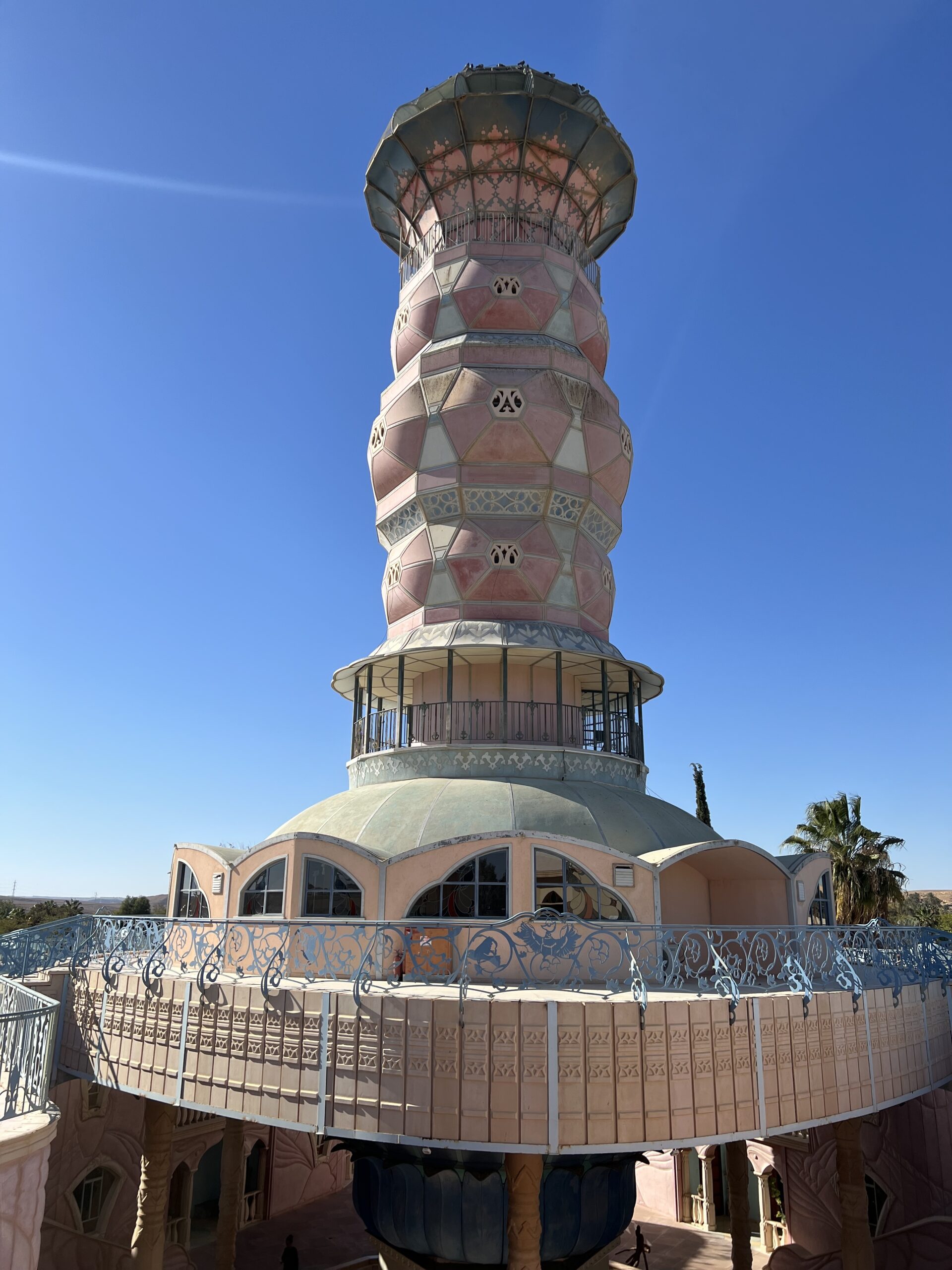
The resort is located near two hippy encampments: the moshav of Shaharut just down the road, where some of the employees live, and Ne’ot Semedar, which offers tours of its artist’s complex (festooned around a natural desert cooling system shaped like a giant phallus) and the kibbutz’s organic winery. The eponymous Semedar wine, made with 22 herbs and spices (thinking of you, Colonel Sanders), was so good, we had to buy a bottle.

Ne’ot Semedar

Shaharut was clearly a splurge, but it felt entirely appropriate to mark, like Harry Potter’s lightning scar, my new status as a real-life “boy who lived,” one who successfully fought off the Voldemort in his blood.

I first “reviewed” Six Senses Shaharut for The Jerusalem Post.

Pictures: credit – Brian Blum

{ 0 comments }

As 2025 draws to a close, it’s traditional to make lists – lists of resolutions, lists of predictions for the coming year. I’d like to draw from a custom our family has adopted for Shabbat.

Instead of singing “Eishet Chayil” – the biblical poem expressing gratitude to the lady of the house – after “Shalom Aleichem” on Friday nights, we conduct a gratitude circle, where everyone gets to recall one thing they’re grateful for from the previous week.

With that in mind, I wanted to extend the tradition to the year that just passed. It was a hard one, both personally – with serious physical challenges – and nationally, as the war in Gaza raged for most of the year, while antisemitism surged, culminating in the horrific attack on Bondi Beach in Sydney last week. Corrupt and populist politicians pontificated on every continent, inflaming unsustainable divides.

But there was good, too.  Here’s what’s on my list.

1. Grateful to be alive. A year ago, this month, I had just started a very harsh chemotherapy regimen to address my transformed aggressive lymphoma. It didn’t work, and I was fast-tracked towards a last-grasp treatment called CAR-T, which as I shared last week, nearly didn’t happen, leaving me weeks, if not days, away from leaving this world.

Then, at literally the last moment, the overseas lab was able to engineer the CAR-T cells for which they had previously failed, ship them overnight to Israel and inject them into my body, eradicating the cancer in less than two weeks – an undeniable miracle. There’s still much healing to be done, but as Elton John once crooned, “I’m still standing.”

2. On a national level, Israel’s remarkable destruction of much of Iran’s nuclear program over 12 days in June-July deserves every Israeli’s gratitude. Decades of determined intimidation from the Iranian mullahs were neutralized in less time than it took the CAR-T to knock out my cancer.

This, coupled with the IDF’s previous successes against Hezbollah and Syria, the diminution of Hamas’s military (if not the group’s political) capabilities in Gaza and the release of the remaining living hostages, has truly transformed the Middle East.

3. AI and chatbots. This was the year I became obsessed. I began using AI for all manner of tasks – as a surrogate 24/7 doctor when I didn’t want to burden my own physician at 3 am while I was panicking over some medical anomaly; a writing companion helping me add structure, organization and plot twists to both my non-fiction and fiction compositions; an online travel agent for quick trip planning; a therapist to rival my real-world one.

I’ll be expounding on how I use chatbots in my writing for an upcoming column, but in the meantime, I’m grateful to Google, OpenAI and Anthropic for their pioneering breakthroughs.

4. Growth in marriage. I’d be disingenuous if I said a year of hellish health hadn’t taken a toll on my relationship with Jody, my wife. Truths were unveiled that weren’t always easy to deal with, and at times threatened to derail 37 years of relationship. But we persevered, communicated more honestly, and by confronting the scariest possibilities, have pulled through.

If anything, things have gotten better – maybe even the best they’ve ever been in our marriage. I pray that can be an inspiration to others who are going through similarly challenging situations.

5. Grandchildren. When Ilai, our first grandchild, was born, Jody and I fretted that we wouldn’t know how to slot in time with him given our busy schedules. When granddaughter Roni was born two years later, we wondered how we could pick up two little tykes from separate preschools and give them both the attention they craved.

Those fears turned out to be entirely unfounded as time seemingly expanded to accommodate family joys and work obligations. The gratitude I feel toward this change in our lives is as deep as it gets. When a two-year-old runs to give you a knee hug, is there anything better?

6. New friends. There’s nothing like being critically ill to show you who your friends are – and who they might be. I am grateful to the friends who came, week after week, to have lunch with me when I wasn’t strong enough to go out, and to new friends who stepped into the void, unbidden, and have since become some of the people I’m closest with now. No names, but you know who you are.

A parallel gratitude to delivery services like Wolt and to the growing number of chefs delivering homemade food for Shabbat, both of which made ordering tasty and healthy meals a click away.

7. A stellar year for television. This might seem a trivial topic to conclude my gratitude list, but as I recovered from CAR-T, my energy level was not what it once was. As a result, nightly TV binges became a welcome norm. And many of the shows we watched were a delight. I divide my pop culture interests between science fiction, which I watch with my son, Aviv, and feel-good comedies, dramas and documentaries with Jody.

For the former, Pluribus, Foundation, Severance, Silo, Dark Matter, Fallout, 3 Body Problem, Travelers and Stranger Things all hit the mark. With Jody, I’ve enjoyed Shrinking, Your Friends and Neighbors, Man on the Inside, Pachinko, Paradise, Nobody Wants This, A Body That Works and The Beauty Queen of Jerusalem. For both Jody and Aviv, we couldn’t get enough of The Bear and, lately, the surreal paranoia of The Chair Company. I’m grateful that we can consume TV voraciously and without guilt.

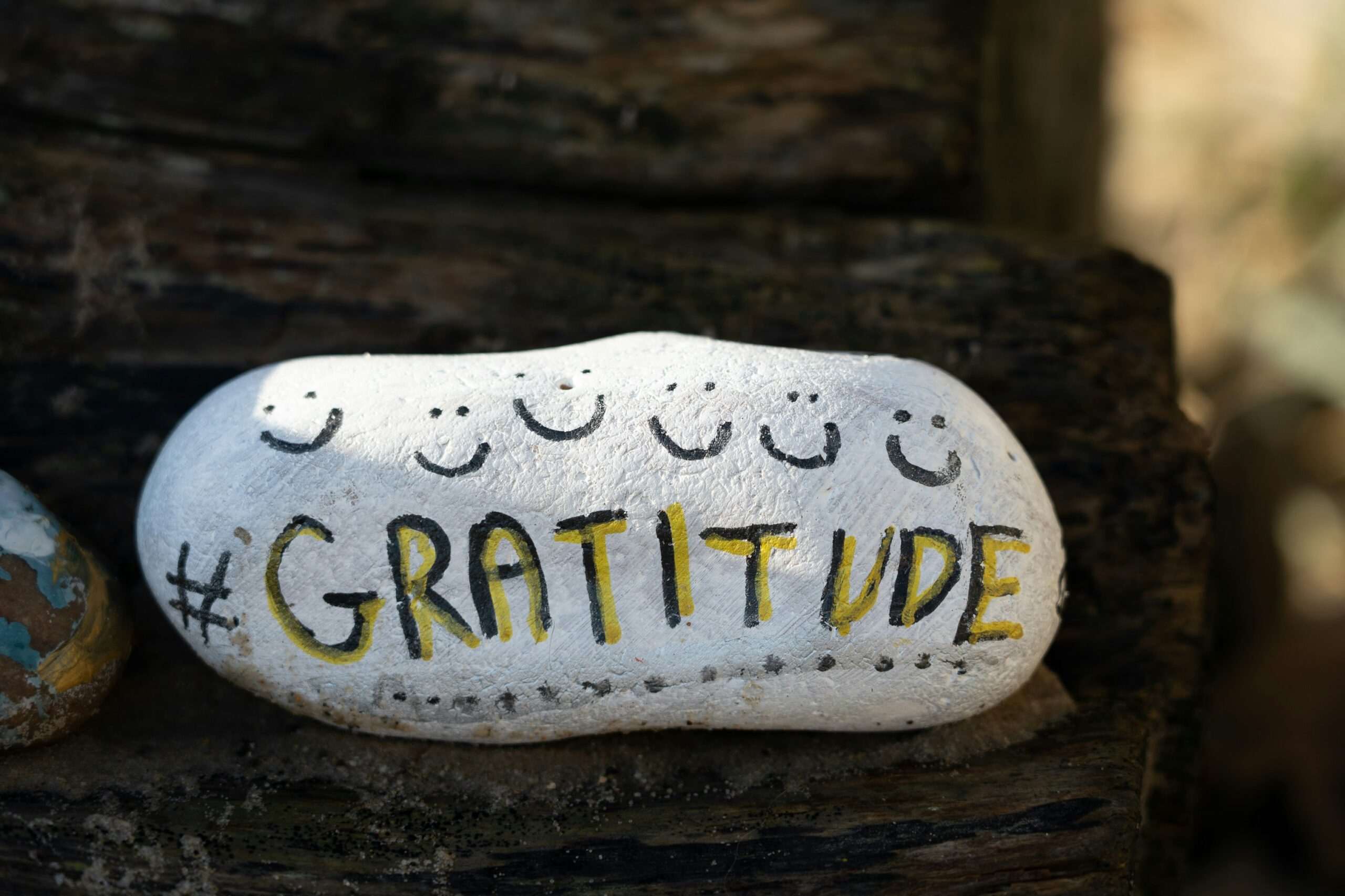
As Rabbi Tal Sessler writes in his book Torah for Mental Health, “Gratitude isn’t just a feeling. It’s a practice.”

So, let’s practice: A happy and grateful New Year to readers near and far!

I first expressed my 2025 gratitude at The Jerusalem Post.

Photo by Nick Fewings on Unsplash

{ 0 comments }

Here’s news I know many readers have been anxiously awaiting: The CAR-T was a success! My 30-day and 90-day PET CTs both showed “no uptake” of the radioactive dye injected as part of the scanning process. For the first time in seven years, I am cancer-free.

CAR-T infusion

I have known the CAR-T worked for several months now, but I wasn’t ready to share it. First, because the gold standard is that there are no signs of lymphoma over the course of two PET CTs and, second, I was worried that the bladder lesions I wrote about previously could have been malignant. Pathology has now confirmed it as “severe chronic inflammation,” unpleasant for sure, but not cancer.

This seemed like a good time for a short “CAR-T explainer.” I’ve dribbled out bits and bobs of information over the past year on how this sci-fi treatment works, but the actual miracle is worth spending a few more minutes on.

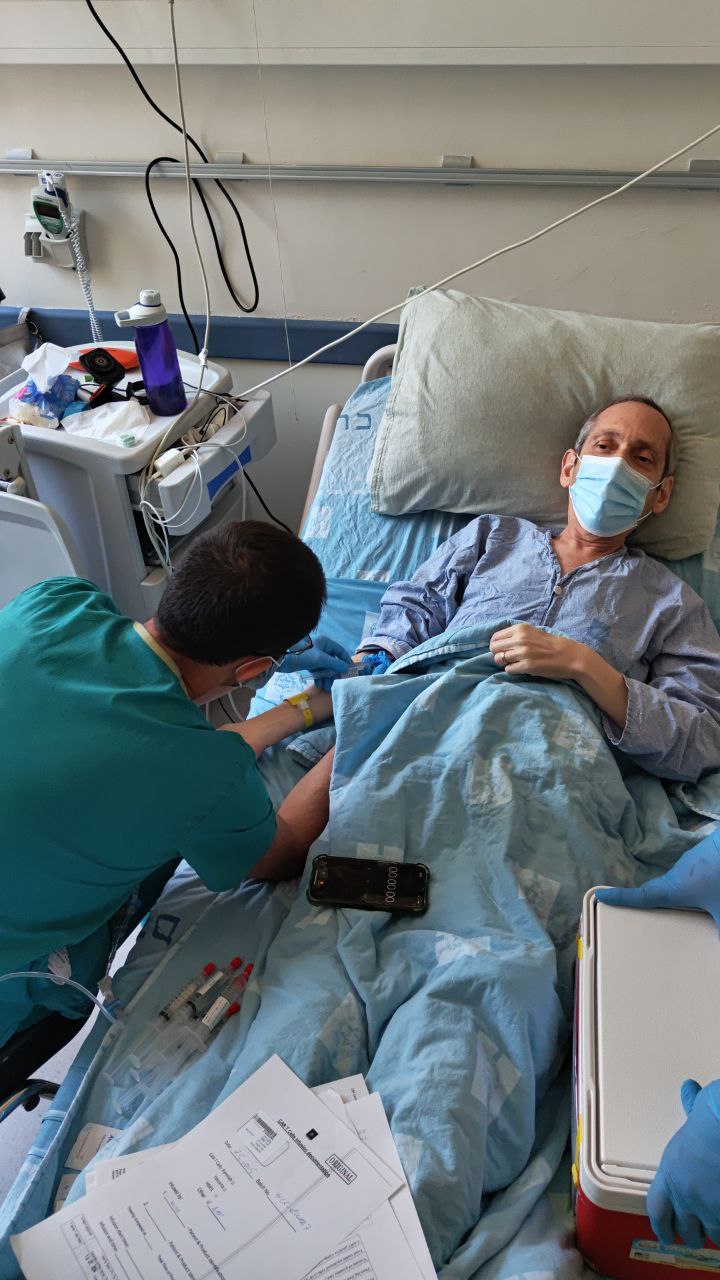
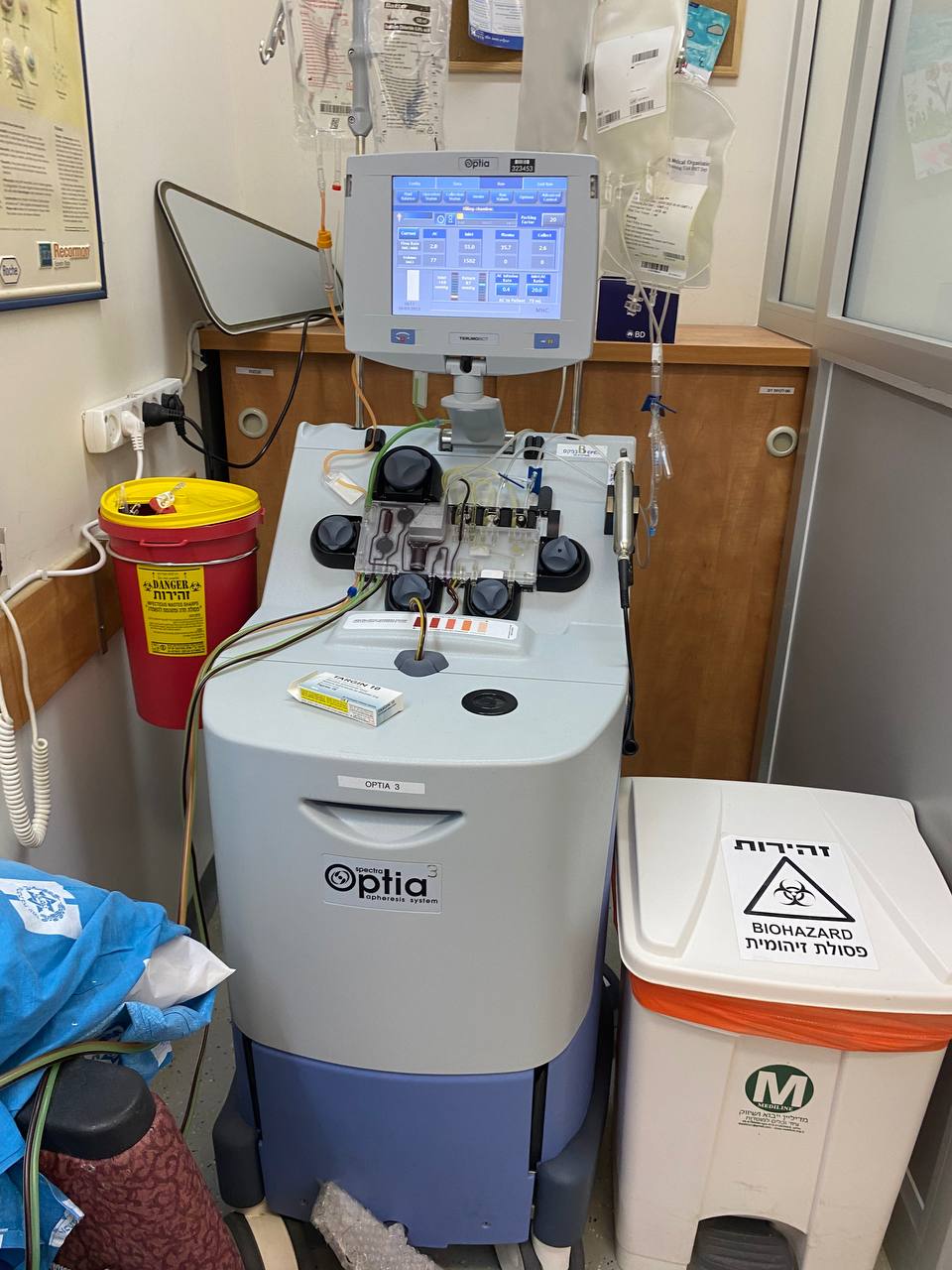
A form of immunotherapy, the CAR-T process starts when millions of your own T-cells are extracted via IV, then sent to a lab to be re-engineered to include a “CAR” – a “chimeric antigen receptor” – on the T-cell.

Extracting T-cells

All cells have molecules called MHCs (short for “major histocompatibility complex”) on their surfaces. If a cell is cancerous, it sends small protein fragments to display on the MHCs. This signals the immune system that the cell is abnormal and should be eliminated.

But cancer cells are sneaky, and they can hide the MHCs from the immune system.

That’s where the CARs come in – they can directly recognize tumor antigens without needing to locate the MHC molecules. Once a CAR-T cell locates and binds to a cancer cell, it kills it and then, remarkably, proceeds to make more CAR-Ts, not in the lab this time but in the patient’s own body.

CAR-T causes less collateral damage to healthy cells than standard chemo. And, remarkably, it works in a matter of weeks.

The treatment has side effects, of course, some quite dangerous. The worst is the dreaded CRS – a “cytokine release storm” – which was the main killer when Covid-19 first appeared and we knew very little about how to fight it. A CRS is basically your immune system going into overdrive trying to get rid of what it perceives as a malign foreign body.

I got a CRS – it was stage three, and I was on oxygen and tocilizumab, an anti-CRS med, for a week, which thankfully knocked out my high fever. That’s one reason Israeli hospitals insist you stay as an inpatient for a minimum of three weeks. In other countries, CAR-T is often administered outpatient with the recipient residing in a nearby hotel. But if you get a CRS, you’re admitted to the ICU. I had my own private isolation room on the Bone Marrow Transplant ward the entire time.

The weirdest side effect: CAR-T makes your pee smell like corn.

The first week you’re in the hospital, you receive three days of lympho-depleting chemo to totally trash your immune system so the CAR-T cells can do their work.

Then for two weeks after, the doctors monitor for CRS along with ICANS (Immune Effector Cell-Associated Neurotoxicity Syndrome) – a usually temporary predicament where you suffer cognitive impairment. Twice a day, I was asked to count down by tens from 100 to zero. I was always able to do it.

I almost didn’t get the CAR-T – the lab that received my T-cells for re-engineering was initially unable to attach the CARs to them; my cells were too diseased and full of chemo, they explained. Instead, my hematologist recommended I enroll in a clinical trial for “allo-CAR-T” where they use off-the-shelf, cancer- and chemo-free T-cells from anonymous donors, rather than your own.

That company was concerned, however, because they didn’t want any complications when they presented their preliminary findings for FDA approval. I already had a nephrostomy tube coming out of my right kidney while my left kidney no longer functioned, which meant I was far from a “simple case.” I also had “high tumor burden,” meaning essentially, I had a lot of cancer in me – harder for CAR-T to treat.

I was turned down.

As my body flailed and my wife, Jody, fretted, the original lab that hadn’t been able to re-engineer my cells, reported that they had succeeded. Fifty million of my cells were on their way to Israel! That was only half of what they usually like to make, but apparently it was enough.

I was hospitalized for a total of six weeks during which time I was so weak I could barely get out of bed. We hired a foreign worker to watch over me and help me to the bathroom.

CAR-T is not cheap – in the U.S., it can run up to $1 million when you factor in the hospital stay, personnel and follow-up. The medicine itself runs between $370,000 and $475,000. That said, CAR-T has probably the best profile of any blood cancer drug for inducing a medium to long-term remission, which occurs in about two-thirds of patients.

CAR-T currently only works well for blood cancers like mine, which include lymphoma, leukemia and multiple myeloma.

Researchers are hard at work to make CAR-T effective for solid tumors. In the meantime, there’s hope that it will become a first-line treatment, displacing chemo entirely, and giving people like me years of “progression-free survival.”

While I know my cancer most likely will return someday (that’s the tragic nature of lymphoma), hopefully that won’t be for a long time and, by then, less abrasive and even more effective treatments will become available.

Or maybe I’ll be among the fortunate 30% of patients for whom cancer never comes back.

I first explained CAR-T in The Jerusalem Post.

{ 0 comments }

The patient hiker

by Brian on November 30, 2025

in Cancer,Health,Mindfulness,Travel

What do the Trump plan for Gaza, hiking Nahal Katlav in the Jerusalem Hills and getting CAR-T treatment for cancer have in common? They’re all representative of non-linear processes that are characterized by frequent ups and downs.

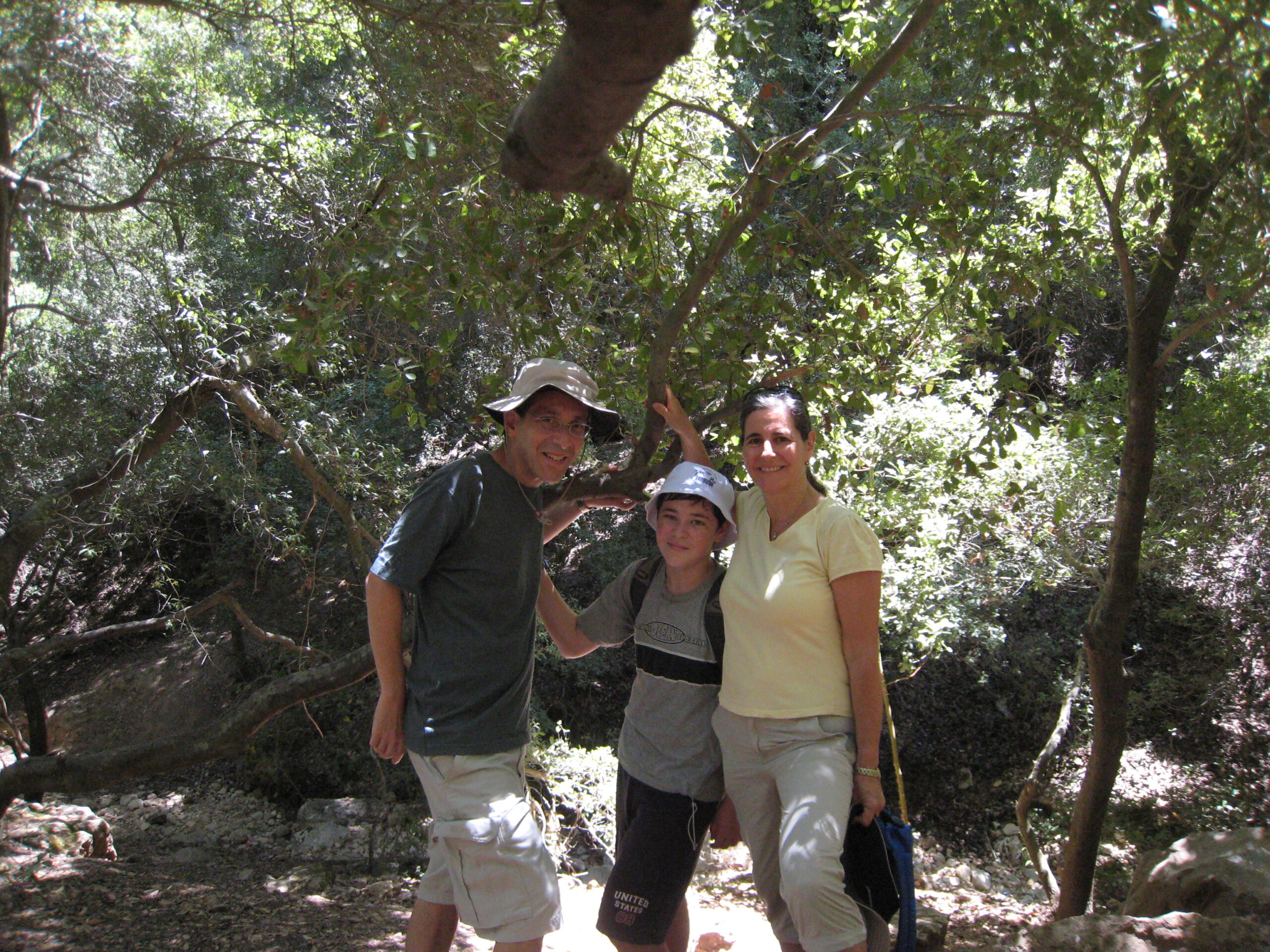
Hiking Nahal Katlav for Aviv’s bar mitzvah 14 years ago

Viewing life this way is an idea I’m trying to incorporate into my personal, professional and even political perspectives.

My thinking on this started with an episode of Ark Media’s “For Heaven’s Sake” podcast in which hosts Donniel Hartman and Yossi Klein Halevi discussed how the ceasefire and rebuilding of Gaza is going to be a “process … [one that’s] “going to take time.”

Disarming Hamas, reconstituting Gaza, getting other Middle Eastern nations on board and expanding the Abraham Accords are all things I want to happen now. But we need patience. Nothing is about to be definitively solved tomorrow.

“It’s going to be day by day,” Hartman told a somewhat skeptical Klein Halevi, or even “month by month for us to be able to see whether we’re achieving what we hoped for.”

Political, along with societal, change is notoriously slow. It’s not a switch or a quick fix. Will a ceasefire and the return of hostages result in a reduction in antisemitism and an end to boycotts, so that international musicians will play again in Israel and Jewish authors won’t be banned from bookstores in Brooklyn?

Over time, I’d like to think so, but long-term processes are more about embracing “a cycle of endless refinement and continuous improvement,” University of Baltimore economist Prof. Barry Brownstein writes. At best, there will be incremental wins.

Having patience with the inherent ups and downs is essential to the joy of hiking, too. Some stretches will be easy, while others are brutally uphill, but it’s all still one hike.

I mentioned Nahal Katlav, which has long been one of our family’s favorites. You start near Bar Giora and descend into a tree-lined valley.

But what goes down must eventually come up. And that “up” is particularly tough. At one point, you’re literally scrambling up rocks on the side of the mountain with little to hold onto. Unless you have two cars and can park one at the bottom, or you’re someone who strives for a strenuous challenge, you have to accept the good with the bad. Otherwise, you’ll miss out on some of this country’s most stunning scenery.

That maps to my experience recovering from CAR-T, the cancer treatment that kept me in the hospital for six weeks earlier this year. I knew I needed to do it, yet the recovery has been longer and more difficult than I’d anticipated; it’s been more than six months since my discharge, and I am still fatigued, immunocompromised and haven’t been able to regain the 15 kg I lost along the way.

That’s when my impatience kicks into overdrive. I want to get back to the man I was. I want to do more than watch TV every night. I want to travel again. I want to be able to eat my favorite foods without feeling nauseous. I want to push my grandchildren on the swings in the park. I want to get back on our elliptical machine.

I’m confident I eventually will. Just not yet – it’s a process. Some days I can walk for an hour with my arms swinging briskly. Other days I can barely get out of bed. And I never know which day it’s going to be when I wake up. Healing is unapologetically non-linear.

My body is akin to hiking Nahal Katlav. Sometimes you’re tired and sometimes more energized. A change in language is key here. Say: “I am in a healing process” rather than “I’m frustrated that I’m not already fully healed.” Can I visualize healing as a graph, an upward trend, rather than “I must be ‘fixed’ by such and such a date.”

The hike metaphor also works as a tool to interrupt the destructive loops of grief and control-seeking I periodically find myself falling into. If I push hard enough – on doctors, on my wife, on myself – I think maybe I can force my healing to arrive faster. Reframing it as a hike is thus a way of reminding myself that “awful today” doesn’t mean “failed forever.” It provides a mental handhold that stops the spiral. I can say, “This part is a vertical scramble. I’ve done scrambles before. Scrambles end.”

There’s one more way to understand and manage impatience. We as modern, Western adults have gotten used to life running smoothly. So, when change doesn’t happen in an instant, we feel furious, like reality has sabotaged some unwritten contract.

“Why isn’t life doing what I ordered?” we ask ourselves. But life doesn’t work like DoorDash or Wolt. And even those amazing delivery services sometimes suffer delays and disappointments. The motorcycle breaks down. The pizza is undercooked. Not everything – perhaps very little, indeed – is in our control.

Similarly, when I’m at my computer and the Internet goes out. I curse the fiber provider, forgetting the blessing of how I now have access to essentially all the information in the world, literally at my fingertips.

Thinking in terms of ups and downs might sound trivial, like a bad cliché. Doesn’t everyone know that’s how the world works? Apparently not. Thinking about health in particular – not to mention the political meandering endemic to our increasingly populist governments – as a hike, with unavoidable ascents and descents, and painfully slow change, has helped me calm down, to feel less wronged and angry.

Life is not a straight, flat road, but “patient hiking” is definitely worth it.

I first wrote about patient hiking for The Jerusalem Post.

{ 0 comments }

Is Israeli emigration harming medical services?

November 16, 2025

I was at the hospital, prepared to be called into surgery for a procedure. I wasn’t taken for 7 hours. Is emigration harming Israel’s medical system?

Read the full article →

Miracle in the medicine cabinet

November 9, 2025

People relate in very different ways to their medicine cabinets. Some folks will toss out anything they’re no longer using. Others hold onto every med indefinitely, even when the expiration dates have passed. I fall into the second category. And on the Jewish holiday of Simchat Torah a few weeks ago, that tendency may have […]

Read the full article →

Jacob’s Ladder returns with rocking, upscale show

October 19, 2025

Was this the last Jacob’s Ladder ever? Festival founders Yehudit and Menachem Vinegrad are staying mum. It really depends on whether they broke even on the weekend held this year between Yom Kippur and Sukkot. Being a chutzpadik Israeli, I asked Menachem and Yehudit point-blank. “We’re British!” Menachem protested. “We don’t talk about such things!” […]

Read the full article →

Fine dining with the Houthis

October 5, 2025

My birthday and my daughter, Merav’s birthday are only a week apart. So, this year, we decided to celebrate together by taking the whole family out to dinner at Janjaria, the over-the-top chef restaurant in the boutique Ramban Hotel in central Jerusalem. Janjaria is operated by the Mahaneyuda Group which has expanded in recent years […]

Read the full article →

What a way to end it all

September 28, 2025

What would I do if the CAR-T didn’t work or didn’t give me the long remission I’m so hoping for? Or a secondary cancer? Would I choose more treatment?

Read the full article →